Document or Drift: Two Traditions for Photographing Parks and Gardens
Parks and gardens are among the most photographed public places: they offer structured composition, seasonal change, and a low-stakes setting for practice. Over the long arc of photography’s history two broad, partly overlapping approaches have governed how people picture cultivated nature. One is documentary: a careful, often scientific impulse to record plants, paths, and structures. The other is experiential: an effort to translate mood, touch, and time into visual language. Each has deep roots and distinct techniques. Below is a compact history followed by a practical comparison and advice for choosing between them on your next visit.
A brief history: recording and feeling
In the nineteenth century, the need to catalogue and study plants led to many of the first photographic uses of gardens. Photographs served as specimens or complements to botanical plates — a way to anchor a plant in place and season. That documentary practice favored clarity: even lighting, careful framing, and attention to detail so that information could be read from the image.
By contrast, a parallel thread in the early twentieth century pushed photography toward mood and interpretation. Influenced by painting and poetic description, movements such as Pictorialism sought soft focus, tonal gradation, and composition that emphasized atmosphere over literal record. In gardens this translated to images that feel like memories — hazy sun, shafts of light, and glimpses rather than exhaustive views.
Today both traditions coexist. Park management still needs accurate records; photographers seeking personal expression want to convey a feeling of being there. Recognizing the lineage helps you choose techniques intentionally rather than defaulting to one style from habit.
Comparing the two approaches
1. The Documentary Approach
- Goal: Preserve clear information — species, layout, condition.
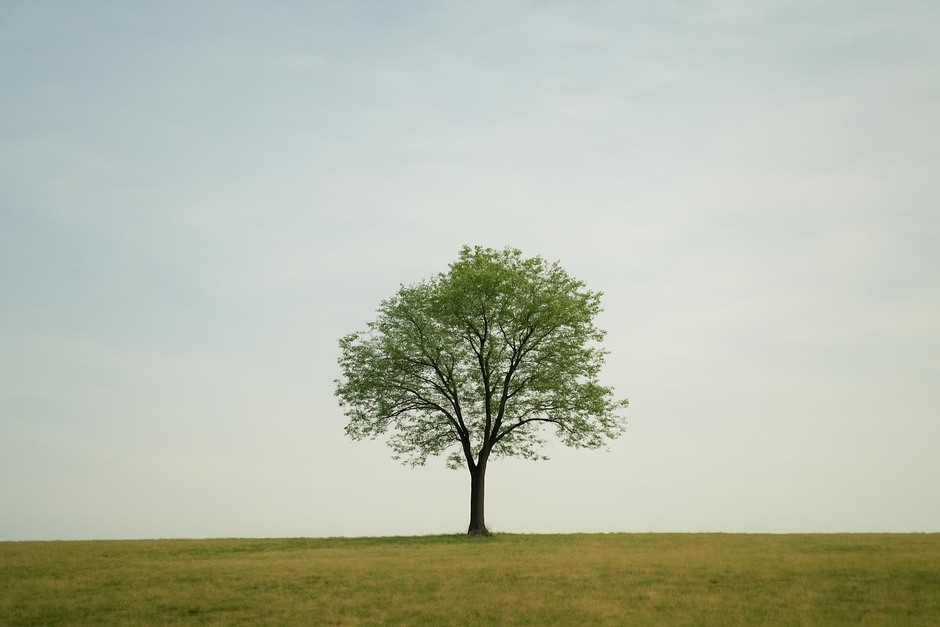
- Composition: Straight-on or plan-view framing, neutral perspectives, minimal distortion.
- Lighting: Even, diffuse light (overcast days or shaded areas) to avoid harsh shadows that obscure detail.
- Technical choices: Smaller apertures (f/8–f/16), tripod use, accurate color balance, careful focus stacking when needed.
- Post-processing: Modest edits to correct perspective and color; emphasis on fidelity rather than mood.
- When it shines: Plant identification, condition surveys, cataloging design features, and when clarity for others is the main objective.
2. The Experiential (Painterly) Approach
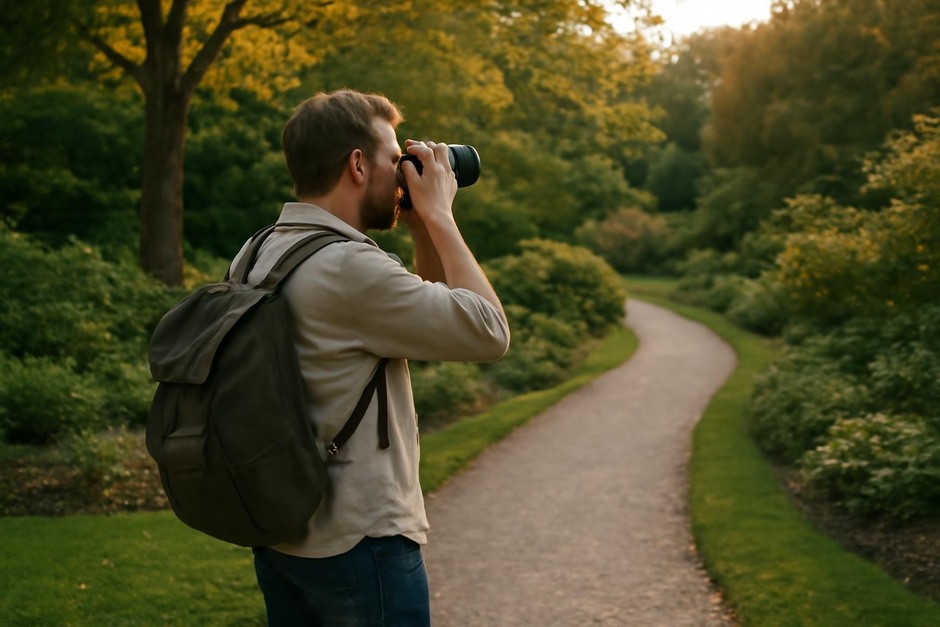
- Goal: Convey an impression — light, scent-memory, or the feel of a moment.
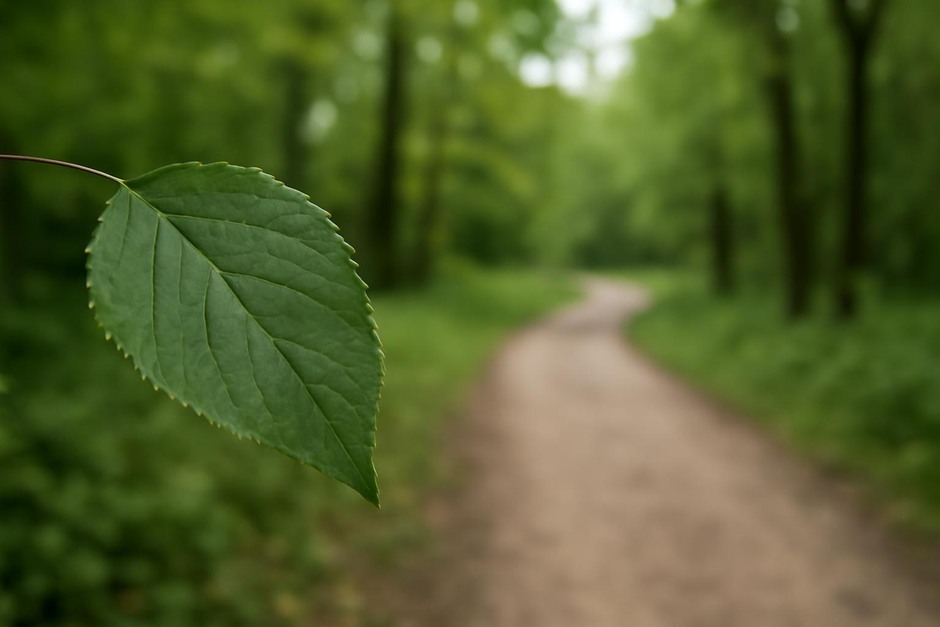
- Composition: Intentional cropping, off-center subjects, and layering of foreground elements to create depth.
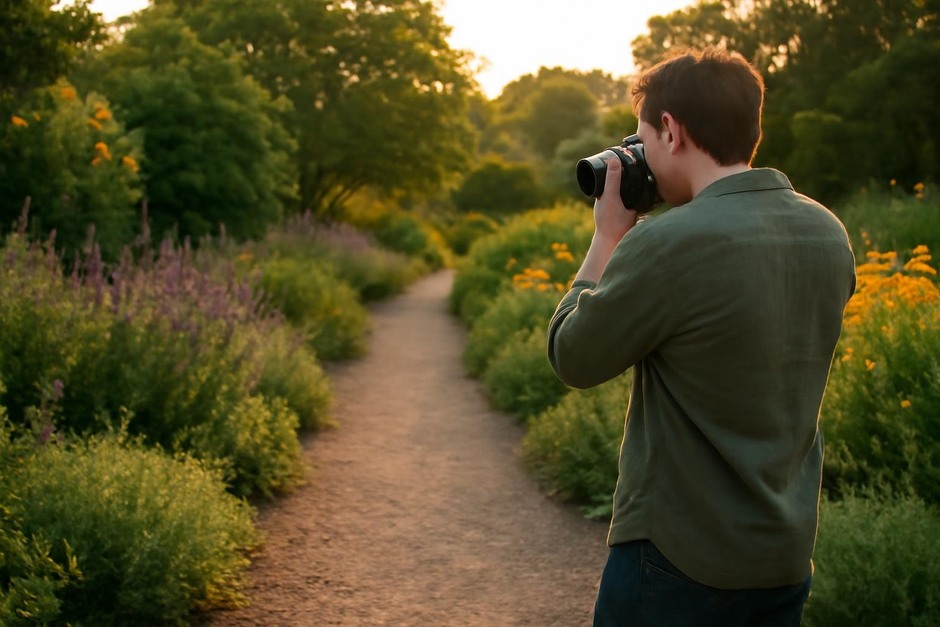
- Lighting: Golden hour, backlight, or filtered sun; light that sculpts rather than flattens.
- Technical choices: Wider apertures (f/1.8–f/5.6) for selective focus, handheld shooting for spontaneity, motion blur to suggest breeze or movement.
- Post-processing: Creative adjustments to tone, grain, and color to heighten atmosphere; selective contrast and vignetting are common.
- When it shines: Personal projects, evocative series, images intended to communicate an experience rather than facts.
How to choose between them — and when to mix
Choosing an approach starts with honestly naming your objective for that visit. Here are practical prompts and a few short exercises to help decide.
Ask practical questions
- Who is the audience? If the images must serve gardeners, planners, or records, lean documentary. If the audience is yourself, a follower, or a gallery, experiential work may be more rewarding.
- What is the project? A species inventory needs clarity; a photo essay about spring in a city park benefits from mood and sequencing.
- How much time do you have? Documentary work can be methodical and slow. If you have only 20 minutes, an experiential approach that captures light and impression may be more feasible.
- What conditions prevail? Harsh midday sun favors documentary techniques (use shade, reflectors, or wait), while golden hour naturally invites painterly choices.
Two short exercises to try both
- Exercise A — The 12-Frame Inventory: Walk a designated 100-meter stretch and make exactly 12 images that document: path, specimen, bench, signage, architectural detail, and so on. Use a tripod or steady hand and keep framing neutral.
- Exercise B — Ten-Minute Drift: Set a timer for ten minutes. Walk without a plan and take only images that respond to light, movement, or a fleeting composition. Use wider apertures and embrace imperfection.
Mixing rules
Most visits reward a hybrid approach. Start with a couple of documentary frames to anchor the place — an overview and a detail — then switch to an experiential mode to record mood. Keeping both kinds of images lets you build a richer visual narrative: the factual supports the evocative, and the evocative gives context to the factual.
Whichever path you choose, slow observation is the common denominator. Whether your aim is to record or to drift, attention to light, season, and the small gestures of place transforms ordinary garden photography into images that last.