The Four-Quadrant Wild Patch: Learning a Garden’s Life in a Handful of Steps
Problem
Big landscapes intimidate. Public parks, meadows, and even a whole backyard present too many variables for casual observation: what to watch, when to visit, and how to tell which changes matter. The result is frequent, unfocused visits that leave few lasting insights. The core problem is scale—time and attention are limited, and without constraints it’s hard to learn the slow patterns that define a place.
Principles
Designing a small study patch boils down to five simple principles. Each principle scales to any space and links directly to an example you can do in an afternoon.
1. Limit
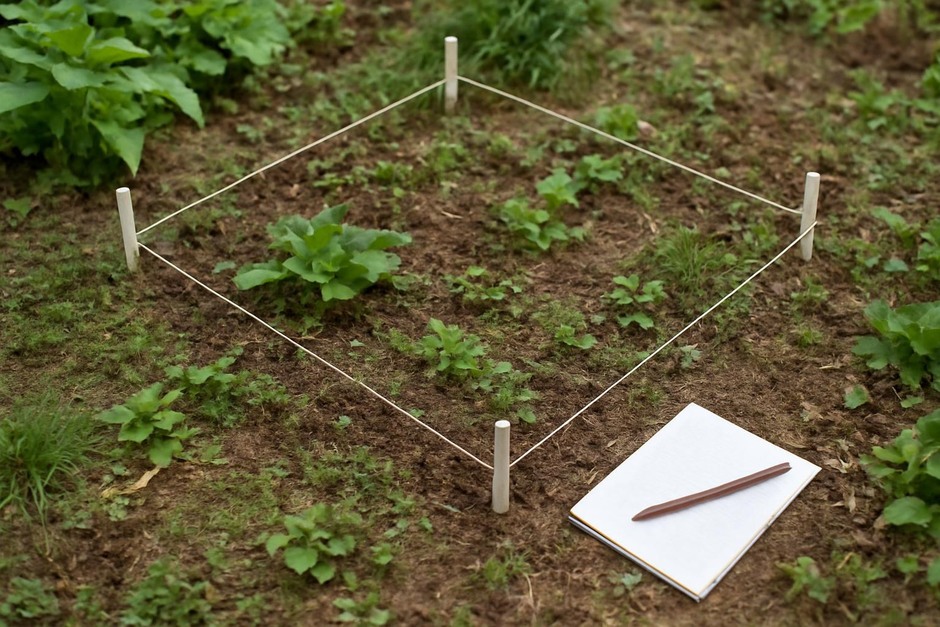
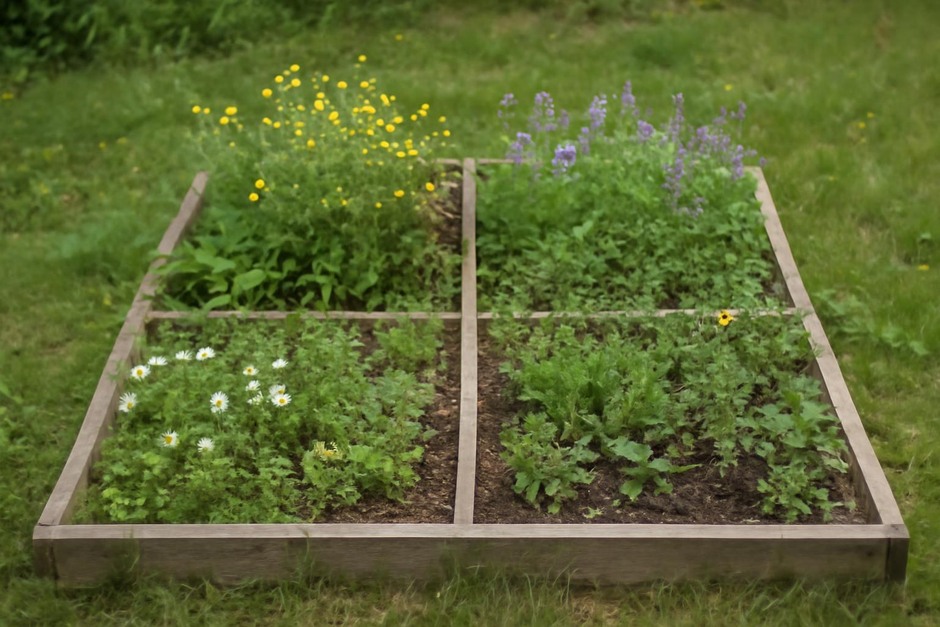
Deliberate boundaries focus attention. A four-quadrant patch—two meters square divided into quarters, or any comparable small area—contains enough diversity to be interesting while remaining inspectable in 15–30 minutes.
2. Repeat
Regular, repeated visits reveal patterns. Weekly or fortnightly returns compress seasonal change into something you can recognize and remember.
3. Contrast
Create or notice contrasts: sunny vs shaded quadrants, bare soil vs mulch, or native plant vs ornamental. Contrasts highlight which variables drive differences in growth, insects, and microhabitat.
4. Measure
Simple counts and short notes make subjective impressions comparable. A ten-minute flower count or a quick sketch converts observation into data without requiring special tools.
5. Disturb and Observe
Small, reversible interventions—stirring the leaf litter, adding a handful of seed, or trimming one stem—test causal relationships. The point isn’t to alter the ecosystem radically but to learn by doing and observing the response.
Examples
Below are three compact experiments you can run in a single four-quadrant patch. Each ties a principle to an observation method and a short prediction to test.
-
Pollinator Pulse (Limit + Repeat)
Method: Spend ten minutes at mid-morning counting insect visits to flowers in each quadrant. Do this once a week for two months.
Prediction: Sunnier quadrants will host more activity earlier in the season; shaded areas may show a later peak. Observation: Note species or types (bees, flies, butterflies) and whether counts shift with bloom phases.
-
Mulch Contrast Trial (Contrast + Measure)
Method: Apply a thin mulch layer to one quadrant and leave the opposite quadrant bare. After four weeks, compare seedling counts, soil moisture (finger test), and surface temperature (by touch or a simple thermometer).
Prediction: Mulched soil will retain moisture and show fewer drought-stressed seedlings; bare soil may warm faster but dry out sooner.
-
Night and Day Bookends (Disturb + Repeat)
Method: Conduct a two-part visit—one just after dusk and one mid-morning the next day. Stir a small patch of leaf litter in one quadrant at dusk and check insect activity and shelter use overnight and at first light.
Prediction: Nocturnal arthropods and shelter-seeking species will increase in disturbed litter by nightfall, and daylight counts of visible arthropods will fall as they retreat.
Practice Checklist
- Choose a compact patch and divide it into four equal quadrants.
- Mark or photograph the patch so you return to the same view each visit.
- Decide on a cadence: weekly or every two weeks for at least three months.
- Pick one short measurement per visit: ten-minute flower or insect count, seedling tally, or soil finger test.
- Introduce a single, small contrast (mulch vs. bare, sun vs. shade) to create comparative data.
- Run short experiments: dusk vs. day visits, brief litter disturbance, or a single-species seeding row.
- Record: date, weather snapshot (temperature, cloud), one quantitative note, and one sensory observation (sound, scent, color).
- Review monthly: look for trends and adjust one variable to test a new hypothesis.
Working in a deliberately small space trains attention, sharpens comparison skills, and makes the processes that shape a garden legible. The four-quadrant patch is not a science project to complete and abandon; it’s a small, ongoing practice—a way to turn casual visits into observations that reveal the living rhythms of place.