Listening to a Garden: Four Practices to Hear What Grows
When you stand in a garden the first thing to fall away is the idea you need to see everything at once. Gardens are stories told in small turns — a spent blossom, a new shoot, the angle of a leaf after rain. Below are four linked practices that treat a garden like a slow conversation: how to notice, what to dwell on, and how to respond in a way that deepens future visits.
1. Slow Looking: Ten Minutes, One Square
Principle: Attention grows with limits. Give yourself a modest frame and hold still inside it.
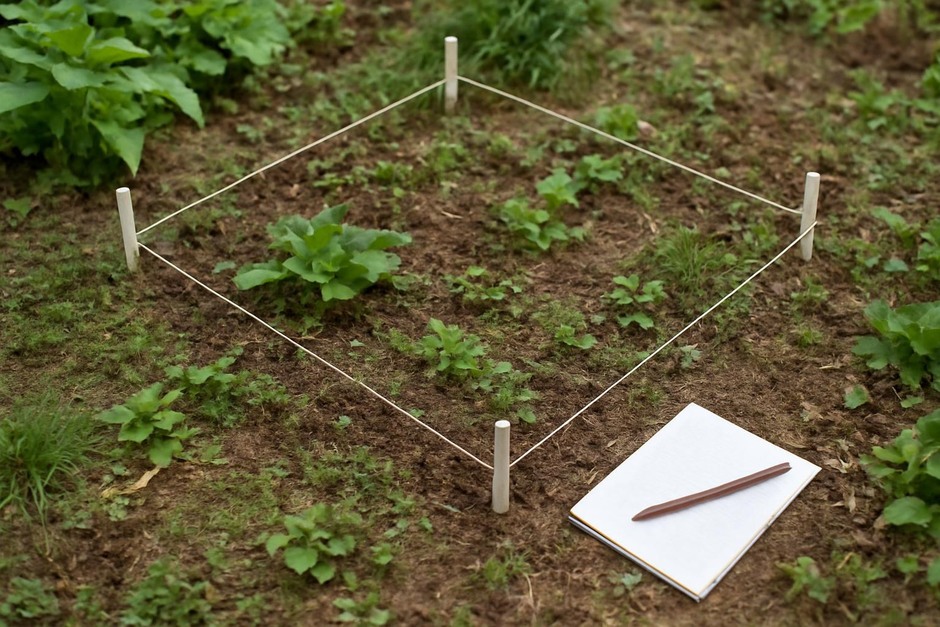
Practice: Choose a single square meter or bench-sized patch. Set a ten-minute timer. Do not move the patch; move only your eyes and ears. For each minute, name one new thing aloud or in a single-sentence note — a scent, an insect, the direction of a shadow. By the tenth minute you will have a small list that sketches presence and motion.
Example: In a city courtyard, the first minute reveals dried flower heads; minute three catches a wasp inspecting the seed heads; minute six registers the scent of damp concrete after a sprinkling from the irrigation system. The list becomes a compressed field report that makes future visits easier to compare.
2. Edge Attention: Read the Boundaries
Principle: Transitions hold a lot of activity. Edges — between lawn and bed, path and planting, sunny and shady — concentrate differences and movement.
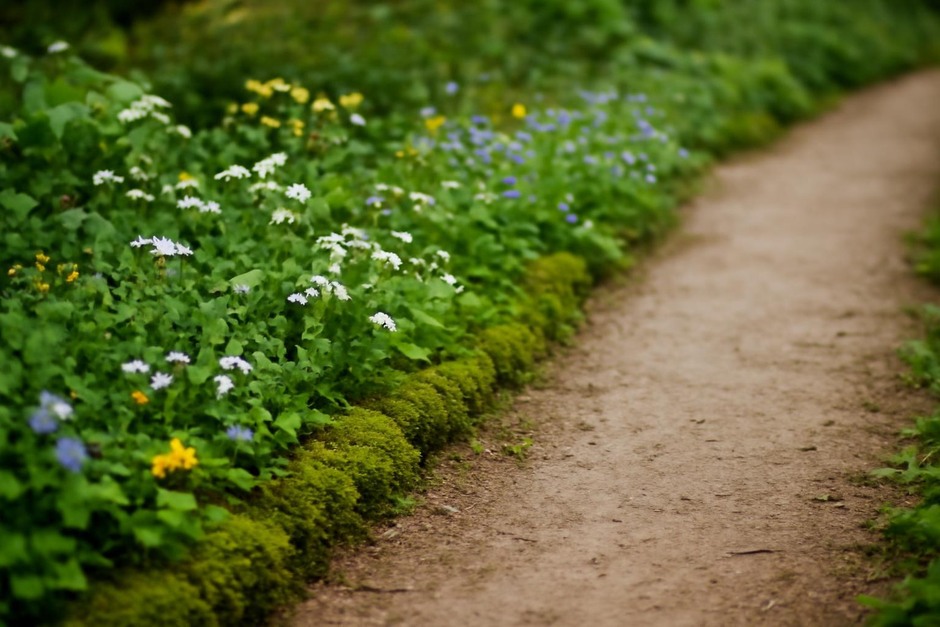
Practice: Walk the perimeter of a chosen bed slowly. At each point where two conditions meet (soil next to paving, perennial next to annual, sun to shade), pause and record one contrast: moisture, texture, color, or movement. Try this three times over a season and note what changes first at the edges.
Example: A border between an oak tree’s shade and a sedum patch may show seedlings only at the sunny edge; moss will claim the stone path where shade and moisture meet. Over months you learn which edges are stable and which migrate.
3. Pattern Time: Watch a Rhythm Twice
Principle: Patterns require repetition to reveal themselves. Two short observations separated by a predictable interval often show the same rhythm at different speeds.
Practice: Identify a candidate pattern — a row of buds along a stem, the daily opening of a flower, the path an ant takes across a stone. Observe it twice: once in the morning and once in the evening of the same day, or once this week and once the following week. Record one visual difference and one invariant.
Example: A morning visit shows morning glory petals closed; evening shows them unfurled and angled toward the last light. The invariant might be the positioning of buds along the vine; the difference is their openness. These two data points let you predict what a midday visit might look like.
4. Gentle Intervention: Small Acts as Experiments
Principle: Minimal, reversible actions can test a question and teach more than passive watching.
Practice: Pick one small, easily undone change: clip a single stem, move a pebble, or flag one seedling with a ribbon. Observe the immediate response and then the response after one week. Keep changes simple and local; the goal is information, not transformation.
Example: Tie a light stake next to a floppy hosta leaf and see whether it continues to flop after a week. If it doesn’t, the problem may be physical rather than nutritional. If it does, you’ve learned that support alone isn’t the issue.
Measured Conclusion
These practices share a few practical virtues: they are short, repeatable, and designed to build a small archive of observations you can actually return to. Over time you accumulate a patterned sense of place without needing big equipment or dramatic projects. The garden’s answers are rarely immediate or declarative — they’re incremental and often modest. Listening with small, well-framed methods turns everyday visits into a slow education. Keep the exercises simple, jot one crisp note each visit, and let the garden show you what question to ask next.